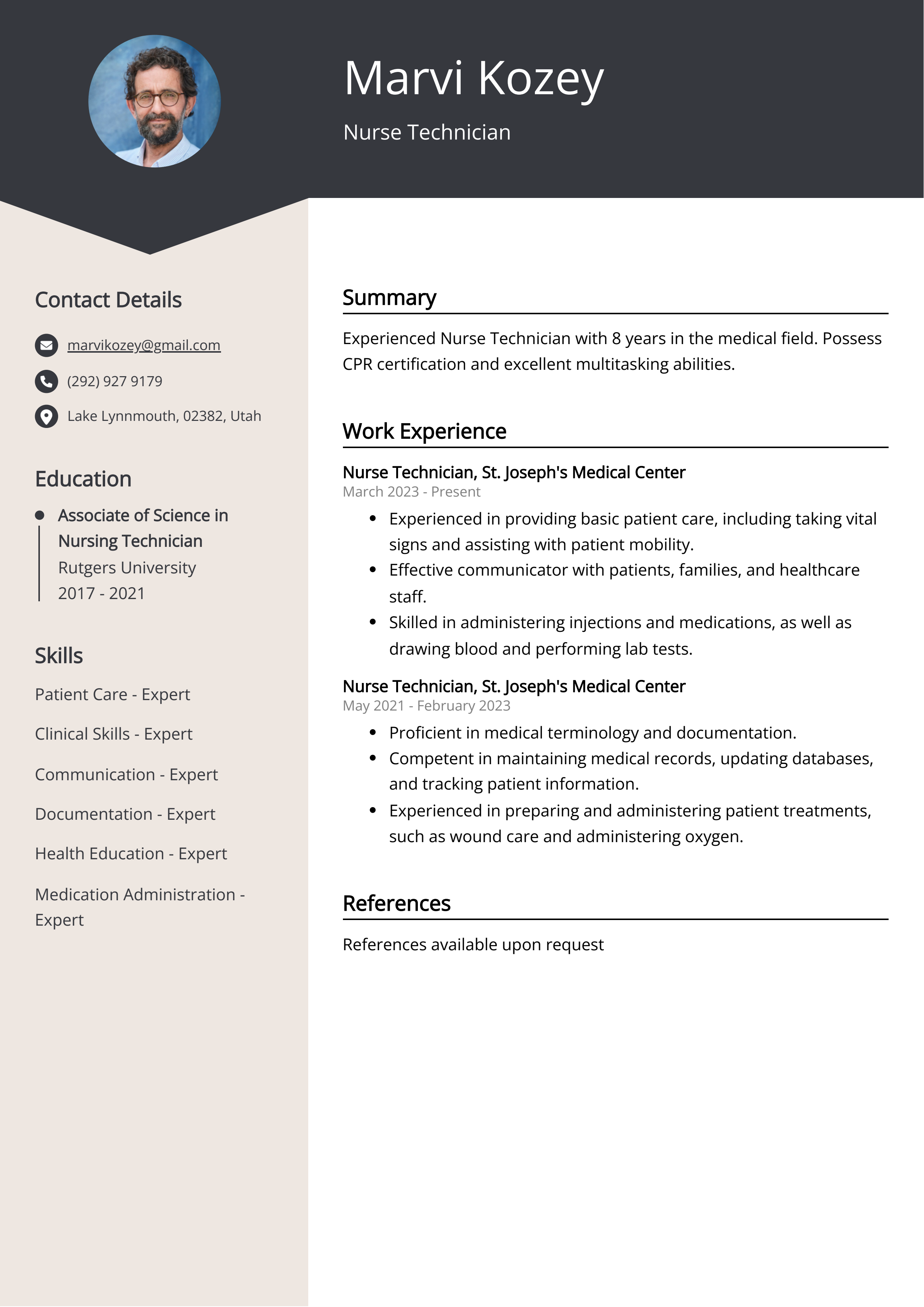
A nurse tech, also known as a nursing technician or patient care technician, provides basic nursing care to patients under the supervision of a registered nurse or doctor. They perform a variety of tasks, including taking vital signs, drawing blood, administering medications, and assisting with patient care. Nurse techs play an important role in the healthcare system, providing essential support to patients and nurses alike.
There are many benefits to working as a nurse tech. These benefits include flexible hours, opportunities for advancement, and the chance to make a difference in the lives of others. Nurse techs are in high demand, and there are many job opportunities available. With the proper training and experience, nurse techs can advance to other roles in the healthcare field, such as registered nurse or physician assistant.
If you are interested in a career in healthcare, becoming a nurse tech is a great place to start. Nurse techs gain valuable experience and skills that can be used in a variety of healthcare settings. With a strong work ethic and a commitment to patient care, nurse techs can make a real difference in the lives of others.
1. Patient care
Patient care is at the heart of a nurse tech’s job description. Nurse techs provide basic nursing care to patients under the supervision of a registered nurse or doctor. This includes tasks such as taking vital signs, drawing blood, administering medications, and assisting with patient care. Nurse techs play an important role in ensuring that patients receive the care they need.
-
Providing Basic Care
Nurse techs provide basic care to patients, such as bathing, dressing, and feeding. They also help patients with mobility, such as getting in and out of bed or walking. -
Monitoring Patients
Nurse techs monitor patients’ vital signs, such as blood pressure, heart rate, and temperature. They also watch for changes in patients’ condition and report any concerns to the nurse or doctor. -
Assisting with Procedures
Nurse techs assist nurses and doctors with procedures, such as giving injections, drawing blood, and starting IVs. They may also help with wound care and other medical procedures. -
Providing Emotional Support
Nurse techs provide emotional support to patients and their families. They listen to patients’ concerns, answer their questions, and help them feel comfortable and supported.
Patient care is a complex and challenging field, but it is also a rewarding one. Nurse techs play an important role in providing quality care to patients and making a difference in their lives.
2. Vital signs
Vital signs are a set of measurements that reflect the body’s basic functions. They include body temperature, pulse rate, respiratory rate, and blood pressure. Monitoring vital signs is an important part of a nurse tech’s job description, as it helps to assess a patient’s overall health and well-being.
-
Temperature
Body temperature is a measure of the heat produced by the body. It is typically measured orally, rectally, or under the armpit. Normal body temperature ranges from 97.6F to 99.6F (36.5C to 37.5C). -
Pulse rate
Pulse rate is a measure of the heart rate. It is typically measured by feeling the pulse at the wrist or neck. Normal pulse rate ranges from 60 to 100 beats per minute. -
Respiratory rate
Respiratory rate is a measure of the number of breaths a person takes per minute. It is typically measured by counting the number of breaths a person takes in one minute. Normal respiratory rate ranges from 12 to 20 breaths per minute. -
Blood pressure
Blood pressure is a measure of the force of blood against the walls of the arteries. It is typically measured using a sphygmomanometer. Normal blood pressure ranges from 120/80 mmHg to 140/90 mmHg.
Monitoring vital signs can help to identify potential health problems early on. For example, a high temperature may indicate an infection, while a low pulse rate may indicate a heart problem. By monitoring vital signs, nurse techs can help to ensure that patients receive the care they need.
3. Medication Administration
Medication administration is another important aspect of a nurse tech’s job description. Nurse techs are responsible for administering medications to patients according to the doctor’s orders. This includes oral medications, injections, and topical medications. Nurse techs must be able to accurately calculate dosages and administer medications safely and effectively.
-
Medication Calculation
Nurse techs must be able to accurately calculate medication dosages based on the doctor’s orders. This requires a good understanding of mathematics and the ability to follow instructions carefully. -
Medication Administration Routes
Nurse techs must be familiar with different medication administration routes, such as oral, injection, and topical. They must also be able to choose the appropriate route of administration based on the medication and the patient’s condition. -
Patient Education
Nurse techs are responsible for educating patients about their medications. This includes explaining the medication’s purpose, side effects, and how to take it correctly. -
Medication Errors
Nurse techs must be aware of the potential for medication errors and take steps to prevent them. This includes checking the medication order carefully, verifying the patient’s identity, and administering the medication at the correct time.
Medication administration is a critical part of a nurse tech’s job description. Nurse techs play an important role in ensuring that patients receive the medications they need safely and effectively.
4. Assisting nurses
Assisting nurses is a crucial aspect of a nurse tech’s job description. Nurse techs work under the supervision of nurses and doctors to provide basic nursing care to patients. They perform a variety of tasks, such as taking vital signs, drawing blood, administering medications, and assisting with patient care. By assisting nurses, nurse techs help to ensure that patients receive the care they need in a timely and efficient manner.
-
Providing Basic Care
Nurse techs assist nurses with providing basic care to patients, such as bathing, dressing, and feeding. They also help patients with mobility, such as getting in and out of bed or walking. -
Monitoring Patients
Nurse techs assist nurses with monitoring patients’ vital signs and overall condition. They report any changes or concerns to the nurse or doctor. -
Assisting with Procedures
Nurse techs assist nurses with procedures, such as giving injections, drawing blood, and starting IVs. They may also help with wound care and other medical procedures. -
Providing Emotional Support
Nurse techs assist nurses with providing emotional support to patients and their families. They listen to patients’ concerns, answer their questions, and help them feel comfortable and supported.
By assisting nurses, nurse techs play a vital role in the healthcare system. They help to ensure that patients receive the care they need and that nurses are able to provide the best possible care to their patients.
FAQs on “Nurse Tech Job Description”
This section provides answers to frequently asked questions about nurse tech job descriptions. These FAQs are designed to provide a comprehensive overview of the role and responsibilities of a nurse tech, as well as the qualifications and training required for this position.
Question 1: What are the primary responsibilities of a nurse tech?
Nurse techs perform a variety of tasks under the supervision of registered nurses and doctors. These tasks may include taking vital signs, drawing blood, administering medications, assisting with patient care, and providing emotional support to patients and their families.
Question 2: What qualifications are required to become a nurse tech?
Nurse techs typically need a high school diploma or equivalent and may be required to complete a state-approved nurse tech training program. Some employers may also prefer candidates with experience in healthcare or customer service.
Question 3: What is the work environment of a nurse tech like?
Nurse techs typically work in hospitals, clinics, long-term care facilities, and other healthcare settings. They may work day, evening, or night shifts, and may be required to work weekends and holidays.
Question 4: What is the career outlook for nurse techs?
The job outlook for nurse techs is expected to be good over the next few years. The aging population and the increasing number of people with chronic conditions will continue to drive demand for healthcare services, including the services provided by nurse techs.
Question 5: What are the benefits of working as a nurse tech?
Nurse techs enjoy a number of benefits, including flexible hours, opportunities for advancement, and the chance to make a difference in the lives of others.
Question 6: What are the challenges of working as a nurse tech?
Nurse techs may face a number of challenges, including working long hours, dealing with difficult patients, and witnessing suffering and death.
Overall, nurse techs play an important role in the healthcare system. They provide essential support to patients and nurses, and they help to ensure that patients receive the care they need.
Please note that these FAQs provide general information about nurse tech job descriptions and the role of nurse techs in the healthcare system. Specific job descriptions and requirements may vary depending on the employer and the healthcare setting.
If you are interested in a career as a nurse tech, I encourage you to research different training programs and job opportunities in your area. You can also talk to a healthcare professional or career counselor to learn more about the role of a nurse tech and whether it is a good fit for you.
Tips for Nurse Techs
Nurse techs play an important role in the healthcare system, providing essential support to patients and nurses. By following these tips, nurse techs can enhance their skills, provide excellent patient care, and advance their careers:
Tip 1: Be compassionate and patient. Patients are often going through a difficult time, so it is important to be compassionate and understanding. Be patient with them and their families, and answer their questions honestly and thoroughly.
Tip 2: Be organized and efficient. Nurse techs have a lot of responsibilities, so it is important to be organized and efficient. Keep track of your tasks and prioritize them so that you can get everything done on time. Use technology to your advantage, and don’t be afraid to ask for help from your colleagues.
Tip 3: Be a team player. Nurse techs work as part of a team, so it is important to be a team player. Communicate with your colleagues and supervisors, and be willing to help out when needed. A positive and cooperative attitude will make your job easier and more enjoyable.
Tip 4: Be professional. Nurse techs represent their profession, so it is important to be professional at all times. Dress appropriately, be on time for your shifts, and maintain a positive attitude. Your professionalism will reflect well on you and your colleagues.
Tip 5: Be proactive. Don’t wait for things to happen, be proactive and take initiative. Look for ways to improve your skills and knowledge, and suggest new ideas to your colleagues and supervisors. Your proactive attitude will help you to advance your career.
By following these tips, nurse techs can enhance their skills, provide excellent patient care, and advance their careers. Nurse techs play an important role in the healthcare system, and their dedication and hard work make a difference in the lives of patients and families.